
What Is a Court Docket in St. Bernard Parish
A court docket is the case schedule and event list. In St. Bernard Parish, a district-court docket may show a filing, setting, arraignment, motion, order, continuance, plea, sentence, judgment, notice, warrant, bond event, release event, dismissal, or other minute entry. It is a map of what has happened or what is scheduled to happen. It is not the same as the complete case file, and it is not a certified background check.
The local trial court is the Thirty-Fourth Judicial District Court. It serves St. Bernard Parish, has original jurisdiction over civil and criminal matters, and operates through five elected divisions: A, B, C, D, and E. Docket questions often depend on division assignment because each division has its own staff contacts. The Clerk of Court maintains filed records and minutes, while a judge's division staff is more relevant when a party already knows the division and needs a hearing, order, courtroom, or setting question answered.
The 34th JDC magistrate rotation publishes monthly magistrate division assignments for 2026.
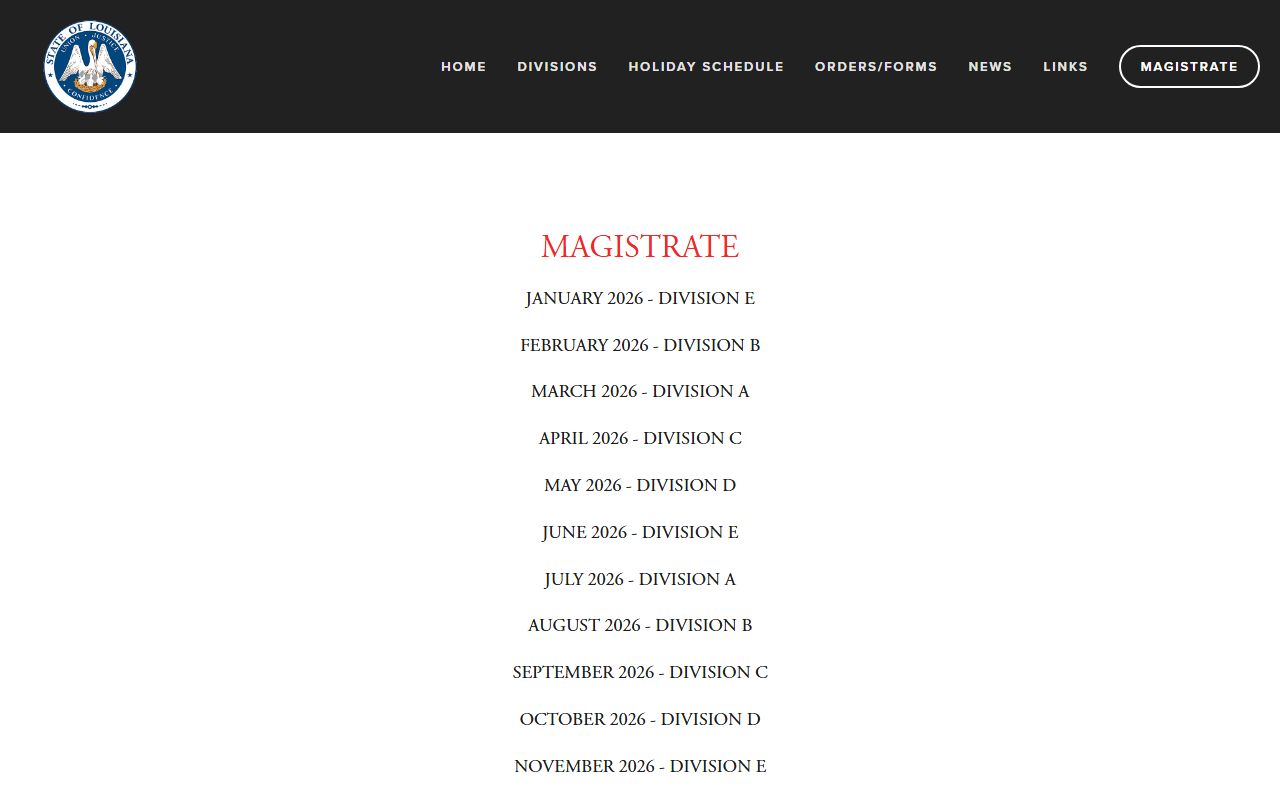
The magistrate rotation is especially useful for early criminal matters such as bond settings, first appearances, warrants, and emergency orders, where a setting may exist before the full criminal record is easy to locate through the Clerk portal.
How to Find St. Bernard Parish Dockets Online
The first official online record path is the St. Bernard Parish Clerk of Court Public Records Search at records.stbclerk.com. The portal requires User ID, password, and subscription access for indexed civil, criminal, land, and related record categories. Because no sample case was publicly viewable before login, users should expect docket or minute access to depend on the paid portal and on the certified index dates published there.
Other online routes serve different docket needs. The 34th JDC site is not a full case-search portal, but it provides court address, division pages, orders and forms, language access information, and the magistrate rotation. The District Attorney's site and mobile app advertise docket and court-calendar features, victim information, and court-contact information. Justice of the Peace courts handle lower-level local matters, but their records and settings should not be assumed to appear in the 34th JDC Clerk subscription search.
- Start with the Clerk Public Records Search when the goal is a civil, criminal, family, probate/succession, or minute record tied to a filed district-court case.
- Check Certified Dates before relying on the search result, because a missing docket may reflect indexing limits rather than no case.
- Use the correct subscription category, such as civil or criminal, instead of searching land, marriage, or other indexes for a court setting.
- If the matter is an upcoming hearing, contact the assigned 34th JDC division when the division is known.
- For criminal court dates, review the District Attorney site or app channel and confirm directly with the court or Clerk before missing a setting.
The 34th JDC orders and forms page helps explain official court workflows that can affect docket entries, including closure orders, guided forms, civil forms links, and the Legal Help Access Point note.
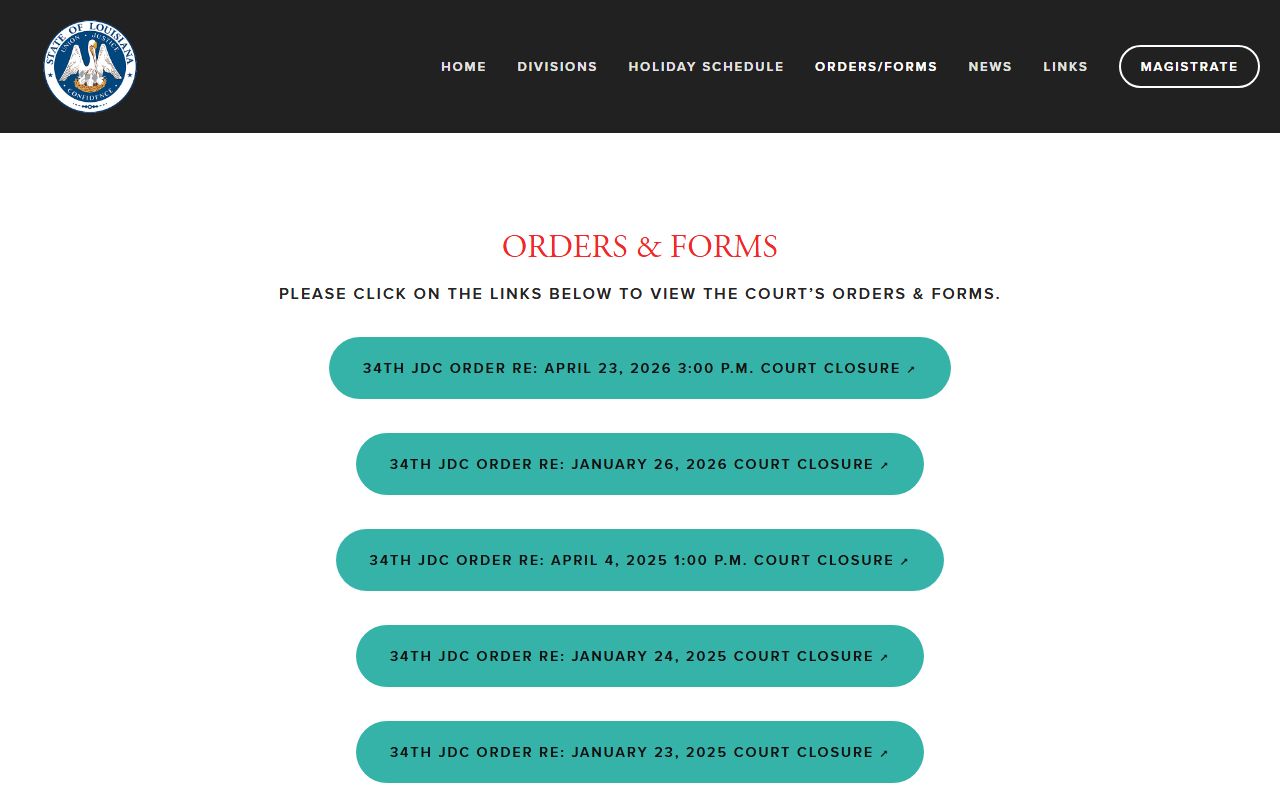
Forms and orders do not replace docket lookup, but they can explain why a case shows a particular filing, continuance, closure order, self-represented form, or civil procedure note.
Sample St. Bernard Parish Docket Entry
No public sample district-court docket entry was visible without Clerk portal login and subscription. A practical field inventory can still be built from the Clerk portal access layer and the research's court-record field list. Docket entries are usually short event records. They should be read together with the case type, division, minute entry, and any available document image because an entry such as "motion granted" or "continued" may not explain the full legal effect without the underlying order.
| Field | What It Shows |
|---|---|
| Entry Date | The date the docket or minute event was recorded, filed, or scheduled. |
| Event Type | A filing, hearing, arraignment, motion, order, continuance, plea, judgment, sentence, notice, warrant, bond event, or dismissal. |
| Case Number | The local court identifier used to connect the docket entry to the broader case file. |
| Division or Judge | The assigned 34th JDC division, A through E, and the judge or courtroom context when listed. |
| Party Filing | The plaintiff, defendant, petitioner, respondent, State, attorney, or other filer associated with the docket entry. |
| Document Link or Image | A portal image, minute, or document reference when available through the paid Clerk system. |
| Status or Disposition | Whether the case or charge appears open, closed, disposed, dismissed, continued, appealed, sealed, or otherwise updated. |
Courts and Offices That Affect St. Bernard Parish Dockets
The 34th Judicial District Court is the central local docket source for district-court matters, but docket access is spread across several practical channels. The Clerk maintains filed records and minutes. The court division pages help with settings and courtroom questions. The District Attorney's Office is important for criminal-court date information and victim-related criminal case updates. Justice of the Peace courts may handle local lower-court matters such as small civil disputes, evictions, and bench-warrant or civil-warrant issues, and those settings may not flow through the same district-court search path.
- Thirty-Fourth Judicial District Court: General-jurisdiction trial court for St. Bernard Parish civil and criminal matters, with five divisions.
- St. Bernard Parish Clerk of Court: Custodian for district-court filings, minutes, images, and copy records tied to filed cases.
- District Attorney's Office: Criminal prosecution office; its site and app advertise docket and court-calendar access, victim information, and court contacts.
- 44th Justice of the Peace Courts: Lower local courts organized by districts A through K for certain local civil and warrant-related matters.
- Federal courts: Eastern District of Louisiana and related federal systems for federal cases involving St. Bernard Parish residents or events.
The St. Bernard Parish District Attorney website is a criminal-court date channel because it advertises docket, court-calendar, magistrate, bond-setting, victim, and contact features.
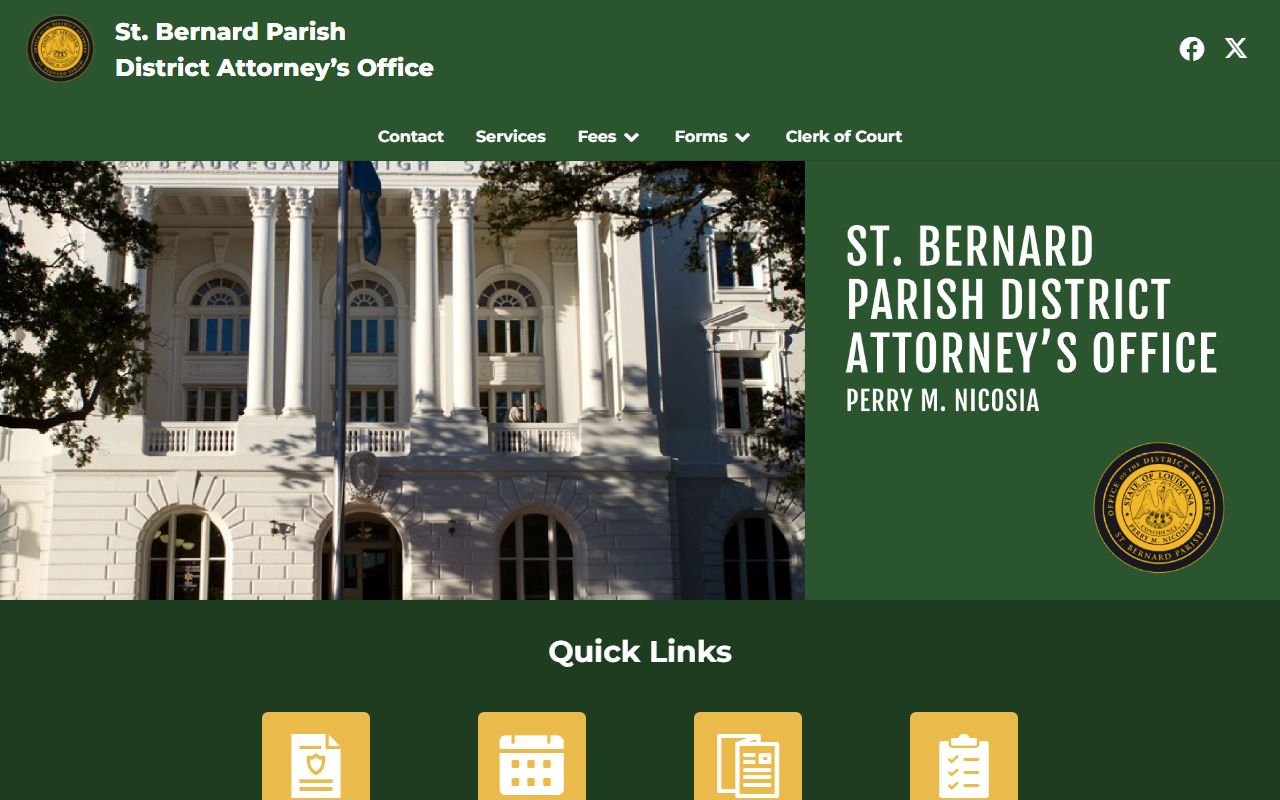
The DA channel is helpful for prosecution-side criminal calendar information, but final verification should still come from the court, Clerk, or assigned division before a defendant, victim, witness, or attorney relies on a date.
Magistrate Rotation and Early Criminal Settings
The 34th JDC magistrate rotation assigns monthly magistrate responsibility by division for 2026. The published rotation lists Division E in January, Division B in February, Division A in March, Division C in April, Division D in May, Division E in June, Division A in July, Division B in August, Division C in September, Division D in October, Division E in November, and Division A in December. That rotation matters because early criminal proceedings can move quickly from sheriff booking to bond setting or first appearance.
A docket user should not treat a magistrate setting as the same thing as the full criminal case record. A person may appear for bond or warrant-related proceedings before all filings, pleas, motions, and dispositions are visible through the Clerk's criminal subscription index. If the issue involves custody, LAVNS or the parish prison may show custody status; if the issue involves the court date, the DA app, court division, or Clerk is the stronger route.
Docket vs. Full Case Record
A docket is a list of events. A full case record is the file behind those events. In St. Bernard Parish, the full record may include pleadings, motions, exhibits when public, service returns, orders, judgments, sentencing documents, notices, minutes, and images. A docket can tell a user that a motion was filed or a hearing was continued, but the full document may be needed to understand the legal claim, relief requested, judge's ruling, or deadline.
| Docket | Full Case Record | |
|---|---|---|
| Format | Event list, calendar entry, or minute-style summary. | Filed documents, images, minutes, orders, judgments, and related case materials. |
| Access | May be available through paid Clerk access, DA calendar tools, or division confirmation. | Often requires Clerk portal subscription, image fees, counter request, mail request, or certified-copy process. |
| Use | Track upcoming hearings, case movement, continuances, pleas, sentencing, and disposition status. | Review legal arguments, evidence references, court orders, detailed judgments, and certified records. |
| Limits | May omit document text or legal context. | May be sealed, redacted, non-digitized, fee-based, or unavailable without proper authority. |
DA App and Court Date Channels
The research identifies a St. Bernard District Attorney mobile app on Apple and Google Play. The app's advertised features include News and Recent Decisions, Victim Information, Docket and Court Calendar, and Court Contact Information. The DA site also prominently prompts users to download the app. That makes the DA app a relevant criminal docket and court-date channel, especially for victims, witnesses, and defendants trying to track prosecution-side court dates.
The St. Bernard District Attorney app listing documents the app channel for docket and court-calendar information.
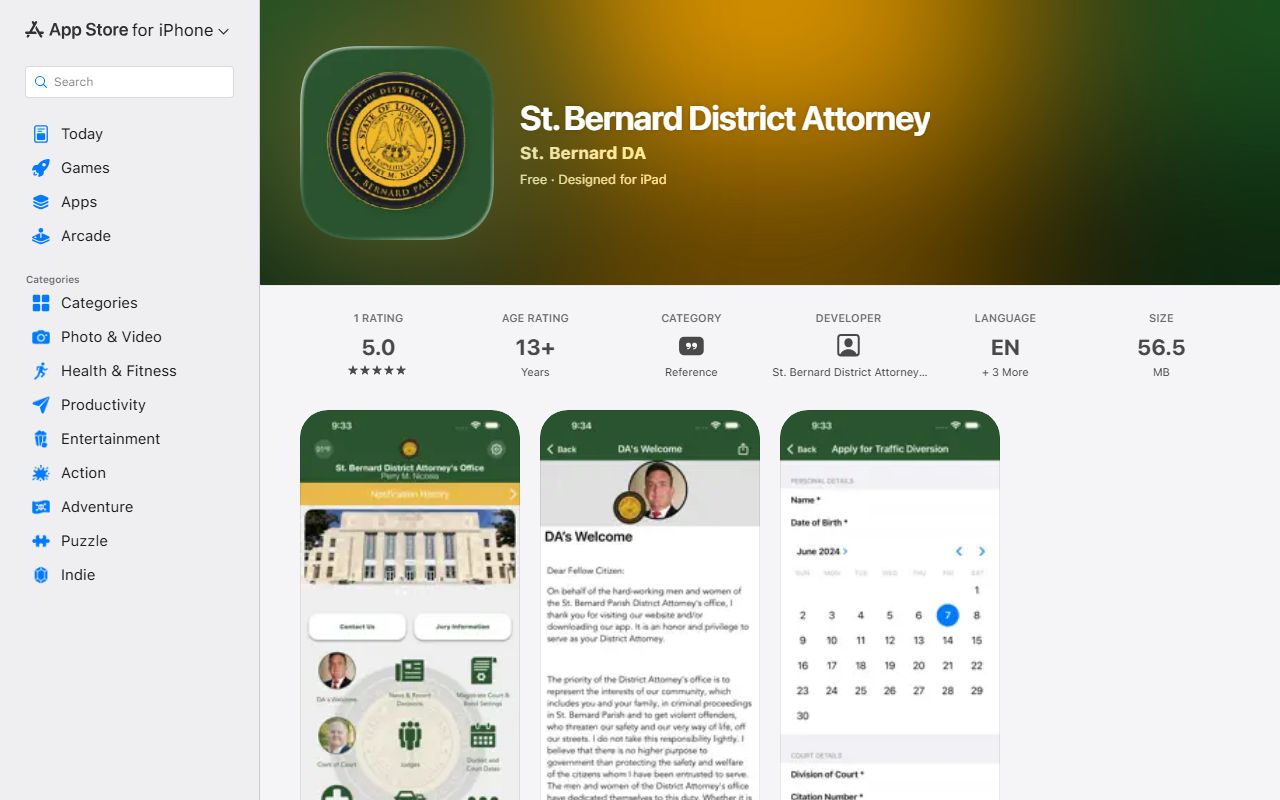
The app can help locate court-date information, but it should not be treated as a substitute for a filed court record, certified docket copy, or direct confirmation from the court when appearance obligations are at stake.
How to Read a St. Bernard Parish Docket
Read a docket from the case identity outward. Confirm the court, case number, party names, case type, division, and date range before interpreting the event list. Then read each entry in sequence. A continuance means a hearing was postponed, not that the case ended. A disposition means an outcome or final event, but the exact effect depends on the case type and the underlying order or minute. A sentence applies after a criminal conviction or plea, while a judgment resolves all or part of a civil, family, succession, or other case.
Common terms from the research include motion, order, judgment, minute entry, docket, disposition, arraignment, plea, sentence, bond, bench warrant, capias, expungement, sealed record, redaction, continuance, subpoena, service, garnishment, lien, succession, and judgment of possession. A docket can show these terms without explaining them in plain language. When the entry matters for a deadline, hearing, warrant, bond condition, appeal, or certified copy, confirm the exact record with the Clerk or assigned court division.
Public access is also limited by record type. Juvenile matters are confidential under Louisiana Children's Code art. 412 except for traffic violations and statutory exceptions. Expunged records are removed from public access under Louisiana Code of Criminal Procedure articles 972 and 973. Law-enforcement and pre-disposition arrest records can be restricted under La. R.S. 44:3. A missing docket entry may reflect a restriction, a sealed case, a non-digitized record, an indexing date issue, or custody by a different office.